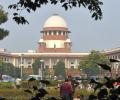
The Supreme Court on Monday said the pleas challenging the Waqf (Amendment) Act's constitutional validity will now be taken up by a bench headed by Chief Justice of India-designate Justice B R Gavai on May 15 as the incumbent CJI will be demitting office on May 13.

The Supreme Court of India has reserved its interim orders on three key issues related to the Waqf (Amendment) Act, 2025, including the power to denotify waqf properties, the composition of waqf boards, and the provision regarding government land. The court heard arguments from both the petitioners, who challenged the validity of the amended law, and the Centre, which defended the Act as a secular concept. The petitioners sought interim orders to prevent the implementation of certain provisions while the court considers the legal challenges.

The Centre on Thursday assured the Supreme Court that it will neither denotify Waqf properties, including "Waqf by user", nor make any appointments to the central Waqf council and boards till May 5.

Khan asserted that he will not allow the central government to take over the waqf properties.
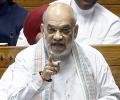
The Lok Sabha passed the Waqf (Amendment) Bill, 2025, with the ruling NDA defending it as beneficial for minorities while the opposition called it "anti-Muslim". All amendments moved by the opposition were rejected and the bill was passed with 288 votes in favor and 232 against. Union Minorities Affairs Minister Kiren Rijiju asserted that India is the safest place in the world for minorities, refuting claims of their insecurity.

The parliamentary committee scrutinising the Waqf bill is set to propose that existing 'Waqf by user' properties will remain so if not in dispute or are government facilities but they must be registered before the new law takes effect, providing little relief to Waqf bodies in their unverified title claims.

Shiv Sena (UBT) chief Uddhav Thackeray has slammed the BJP over its stance on the Waqf Amendment Bill, accusing the party of a "fraudulent" approach and of trying to take away land for its industrialist friends. He also dared the BJP to remove the green color from its party flag if it disliked Muslims. Thackeray's comments come after the bill was passed by the Lok Sabha on Thursday.
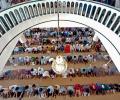
The All India Muslim Personal Law Board (AIMPLB) has urged Muslims to wear a black armband on their right hand during Juma prayers on the last Friday of Ramzan as a mark of protest against the Waqf (Amendment) Bill. The AIMPLB has been vocal in its opposition to the Bill, calling it "controversial, discriminatory and damaging." The organization has planned nationwide protests against the Bill, with large sit-ins scheduled in several cities.
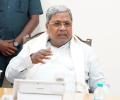
Karnataka Chief Minister Siddaramaiah directed officials on Saturday to immediately retract all notices sent to farmers regarding Waqf land.

The Madhya Pradesh High Court referenced the Supreme Court's Ayodhya verdict principles while ruling on the Bhojshala-Kamal Maula mosque complex case, determining the site to be a temple dedicated to Goddess Saraswati.
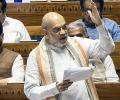
Only four working days are left for the ongoing budget session to come to an end on April 4.

The situation in Muslim-dominated Murshidabad district of West Bengal, which was marred by incidents of violence following protests over the Waqf (Amendment) Act, was calm and peaceful on Wednesday with no reports of any untoward incident. Prohibitory orders were clamped in and around Raghunathganj and Suti police station areas and large police force deployed in all sensitive areas of the district, especially in and around Jangipur town, where a large number of people had assembled on Tuesday afternoon, demanding the withdrawal of the legislation. Internet connectivity remained suspended within the areas under the Jangipur sub-division to prevent the spread of any disinformation. Protestors, who had gathered in large numbers on the NH-12 in the Jangipur area to protest against the Waqf Bill, hurled stones at the police who were deployed in the area, on Tuesday afternoon. A couple of vehicles belonging to the police were allegedly torched during the protest and police had to resort to lathi-charge and use tear gas shells to bring the situation under control. A few policemen were injured in the stone pelting. Police have also detained a few people in connection with the incident. West Bengal Governor C V Ananda Bose condemned the incident and said attempts to disturb the law and order situation in the state "should be put down with an iron hand". The opposition BJP alleged that the law and order situation in the state was "crumbling" under Chief Minister Mamata Banerjee, who was busy with "minority appeasement". The Waqf (Amendment) Bill was passed by the Lok Sabha on Thursday, and by the Rajya Sabha in the early hours of Friday after marathon debates in both Houses of Parliament. The Act aims to streamline the management of Waqf properties (assets permanently donated by Muslims for religious or charitable purposes) with provisions to safeguard heritage sites and promote social welfare. It also seeks to improve governance by enhancing transparency in property management, streamlining coordination between Waqf boards and local authorities and protecting stakeholders' rights.

The inauguration plaque placed inside the shrine has the national emblem etched in the stone, drawing sharp criticism from various quarters.

The TDP and the LJP also supported the Bill being sent to a parliamentary committee for further examination.

A massive controversy is raging in Jammu and Kashmir after a plaque with the Ashoka emblem was vandalised in the Hazratbal shrine as parties on Saturday accused Waqf Board chief Darakshan Andrabi of hurting religious sentiments by using the national emblem in the mosque and demanded registration of a criminal case and her immediate removal.

The opposition Peoples' Democratic Party and Peoples' Conference targeted the ruling National Conference over the meeting, and accused it of surrendering to the Bharatiya Janata Party without even a pretence over the passage of the Waqf act.
Police have detained over 50 people for questioning after a plaque with the Ashoka emblem was vandalized at the Hazratbal shrine in Srinagar. The incident has sparked controversy, with political parties and religious figures expressing outrage.

Introducing the bill, Rijiju said the consultation process of the Joint Parliamentary Committee (JPC) was the largest ever exercise carried out by a parliamentary panel in India's democratic history.

Protests against the Waqf Act turned violent in parts of West Bengal on Friday, with demonstrators setting ablaze vehicles, disrupting traffic and rail movement, and injuring several policemen. The unrest erupted in Suti, Murshidabad district, where protesters defied prohibitory orders, hurled stones at security personnel, and torched police vans and public buses during processions. Police responded with lathi charges and tear gas, while some officers were forced to seek refuge in a nearby mosque. Similar protests were held in Malda and Kolkata, prompting Governor C V Ananda Bose to direct the state government to take swift action against those responsible. The governor also contacted Union Home Minister Amit Shah and held discussions with Chief Minister Mamata Banerjee. The Waqf (Amendment) Bill, which was recently passed by both houses of Parliament, aims to improve the management of Waqf properties, safeguarding heritage sites and promoting social welfare.

Two individuals claiming to be members of the Janata Dal (United) (JD(U)) in Bihar announced their "resignation" from the party, citing dissatisfaction with its support for the Waqf (Amendment) Bill. The JD(U) denied the resignations, claiming the individuals were not party members. However, some senior JD(U) leaders have expressed discontent over the passage of the bill, which they believe is detrimental to Muslims. The controversy over the Waqf Bill is likely to influence the upcoming assembly elections in Bihar.

The parliamentary panel's meetings have become a virtual battleground between the opposition and the ruling party members, who have been vociferously debating the changes to the Waqf Bill proposed by the government.
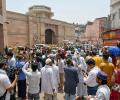
The committee argued that only the Waqf Board has the right to hear any matter pertaining to the mosque.

The meeting of the Joint Committee on Waqf (Amendment) Bill took an ugly turn as the Trinamool Congress MP smashed a glass water bottle and threw it towards panel chairman Jagdambika Pal of the Bharatiya Janata Party during a heated exchange of words with BJP's Abhijit Gangopadhyay, a former Calcutta high court judge.
The civic body has won a "historic legal battle" that was going on since 1979, said Mayor Pushyamitra Bhargava.

Protesters in West Bengal's Murshidabad district set fire to police vehicles and hurled stones during a demonstration against the Waqf (Amendment) Act. The incident occurred on Tuesday afternoon in the Jangipur area, where a large crowd had gathered demanding the withdrawal of the legislation. Police responded with lathi charges and tear gas to control the situation. Several people were detained and police personnel were injured in the stone-pelting. The West Bengal Police has said the situation is under control and strict action will be taken against those who resorted to violence.

A meeting of the joint committee of Parliament on the Waqf (Amendment) Bill on Friday witnessed fireworks with members vociferously opposing certain provisions of the draft legislation, leading to a brief walkout by opposition members.

Both factions of the Jamiat Ulema-e-Hind (Arshad Madani and Mahmood Madani) slammed the Bill and expressed grave concerns over the proposed legislation.

The Bill to amend the Wakf Act, 1995, will make it mandatory for Waqf boards to register their properties with district collectors to ensure their actual valuation.

A section of residents of Sanjauli and Hindu outfits had launched an agitation to press for the demolition of the mosque, claiming that it was unauthorised but no action was taken by the Corporation during the past 15 years.

Hitting out at the Congress government headed by Chief Minister Siddaramaiah, he said the ruling party has reached "height of appeasement politics," and alleged that it has in a way made appeasement of minorities its "goal."

Students at Udai Pratap College in Varanasi, India, protested demanding the removal of a mosque located on the campus. The protest came after tensions arose when a section of students recited Hanuman Chalisa near the mosque while prayers were being offered. The college administration has denied claims by the Uttar Pradesh Sunni Central Waqf Board that the mosque and surrounding land are Waqf property, stating that the mosque was built illegally. The college administration has also accused the mosque of stealing electricity.

The Web portal of the Organiser, the RSS mouthpiece, published an article (withdrawn later) that the Christian community holds many acres of land, far more than Waqf property.'
The Supreme Court on Friday refused to entertain a fresh plea challenging constitutional validity of the Waqf (Amendment) Act, 2025.

The Supreme Court has rejected a petition seeking to prevent the construction of mosques named after Mughal emperor Babur.
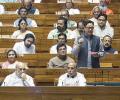
'Muslims need to work according to strategy and not fall into the trap of Opposition parties.'

Uttar Pradesh Chief Minister Yogi Adityanath has vowed to reclaim every inch of land taken under the pretext of Waqf, stating that the state government will actively investigate all "occupied" land. He also criticized the Samajwadi Party (SP) and its leaders, alleging that they failed to uphold the principles of socialist leader Dr. Ram Manohar Lohia. Adityanath praised the Maha Kumbh, highlighting its significance as a symbol of India's spiritual heritage and national unity.

Authorities in Kishtwar district of Jammu and Kashmir have issued an order regulating the collection of donations during Ramzan to prevent unauthorized fundraising and ensure transparency.

Rajiv Gandhi, his son Rahul Gandhi, Union Minister Jyotiraditya Scindia Karan Singh, Naveen Patnaik besides celebrated authors like Amitav Ghosh and Vikram Seth studied at The Doon School.

Several petitions were filed in the apex court challenging the Act, contending that it was discriminatory towards the Muslim community and violated their fundamental rights.
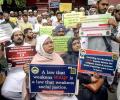
'The new Waqf bill sows the seed for conflict in every town and village of India.'
